
How Democracies Die
Levitsky, S. & Ziblatt, D. (2018). How democracies die. New York: Crown.

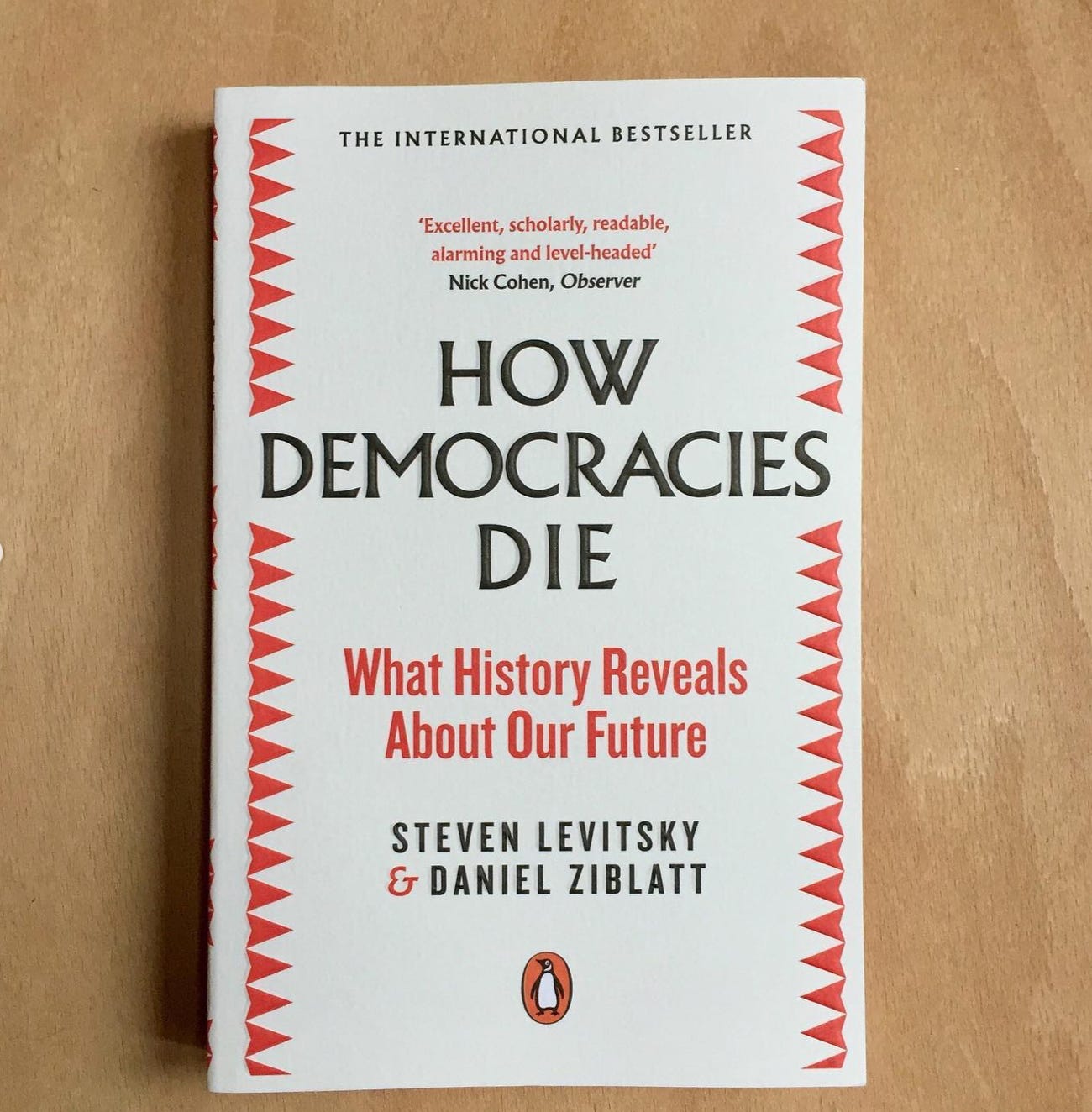
Author: I attended a talk by Ziblatt last year when he was promoting his book in Freiburg. He is an excellent public speaker and a brilliant mind who is cautiously hopeful of a better future to avoid history’s mistakes. His Harvard association and best-seller status are well-worth looking into.
Book: “There is little question America currently finds itself facing a festering democratic crisis. But this crisis runs deeper than Donald Trump”. Ziblatt first identifies the core indicators of America’s current democratic malaise – the attack on rules, norms, and the growing dysfunction of its famous system of checks and balances. He believes that the responsibility to “protect the system” from political extremists belongs to political parties, and urges two concepts that keep checks and balances from turning into constitutional warfare: institutional forbearance and mutual toleration. He concludes with a positive note explaining the polarised process of institutional adjustments as “democratic self-correction” since democracies are transparent, while authoritarian systems seem stable while hiding internal problems (e.g. USSR).
Favourite quote: “the fundamental problem facing American democracy remains extreme partisan division—one fuelled not just by policy differences but by deeper sources of resentment, including racial and religious differences. America’s great polarisation preceded the Trump presidency, and it is very likely to endure beyond it.”
Governance question: according to the book, polarisation levels are at an all-time high, similar to the times of the American civil war. If the book suggests that Democrats should not engage in institutional warfare with Republicans who are already changing the rules of the game, what should American liberals do to prevent an authoritarian take-over?